Blog / Hotels in Space
Hotels in Space: What Orbital Stays Might Actually Look Like
Industries in Space, No. 1 – October 2026
By Galactic Space Industries Team
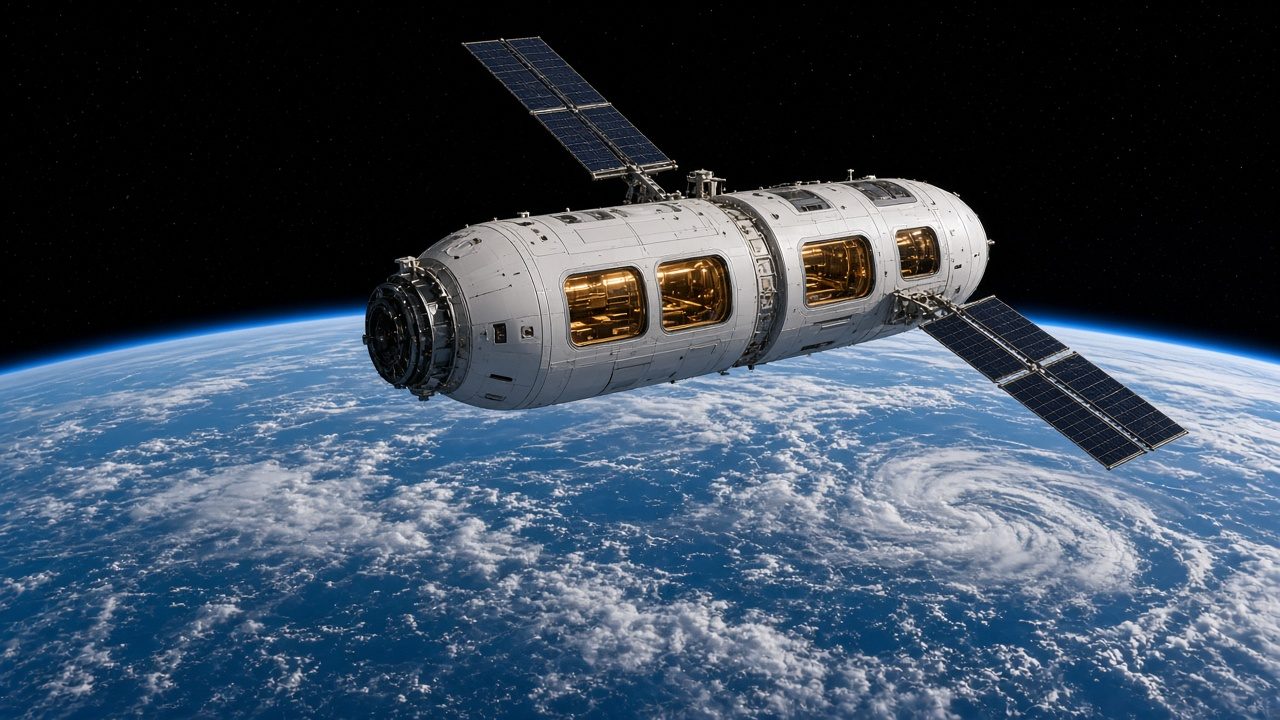
For most of the space age, living off the planet meant training as an astronaut and joining a government crew. That era is ending. Private missions already visit the International Space Station. Companies are building free-flying stations for research, manufacturing and paying guests. The question is no longer whether someone will open a hotel in orbit, but who gets there first — and what a stay will cost.
This instalment of our monthly series on industries in space looks at tourist stations, what a visit might feel like, publicly reported prices, and why orbital hospitality matters.
Why orbital hotels matter
A hotel sounds frivolous next to rockets and laboratories. It is not. Tourism and private astronaut flights are among the few markets that can pay for seats, life support and station time before a full industrial economy exists in orbit. Every paying guest helps fund training pipelines, crew transport, docking hardware and ground support that research and manufacturing customers will also need.
NASA plans to retire the International Space Station around the end of this decade. Its Commercial Low Earth Orbit Destinations programme is meant to leave privately operated stations that can host government astronauts and commercial users. Comfortable quarters sold to private missions are part of how those stations stay alive once the ISS is gone. More visitors also mean more launches, cargo and life support — and eventually more reason to make propellant and spare parts in orbit. Tourism is not the whole economy. It is one of the first customers that can show up with a cheque.
What is being built
Several companies are racing to succeed the ISS as a place people can stay.
Axiom Space already flies private astronaut missions to the ISS aboard SpaceX Crew Dragon. Its first mission, Ax-1, launched in April 2022; seats were publicly reported at about $55 million each for a roughly ten-day stay. NASA has since selected Axiom for further private missions, including Ax-5, targeted no earlier than January 2027. In parallel, Axiom is building Axiom Station: modules that attach to the ISS and later fly free. In December 2024 the company said a revised assembly sequence — starting with a Payload Power Thermal Module — could let the station operate independently as early as 2028.
Vast is aiming for an earlier free-flyer. Its Haven-1 is a single-module station for four crew, with about 45 cubic metres of habitable volume and a 1.1-metre domed window. Vast targets launch in 2027, with two-week missions on a SpaceX Falcon 9 and Dragon, plus Starlink connectivity on board. The longer-term Haven-2 concept starts with a first module in 2028 and grows toward a nine-module station by 2032. Those dates are company targets, not guarantees.
Starlab, a joint venture including Voyager Technologies and Airbus, is designed to keep research going after the ISS. Airbus has pointed to a 2029 launch target on a single SpaceX Starship flight. In February 2026 Starlab said it had completed a Commercial Critical Design Review with NASA in attendance. Hilton is a strategic partner on crew lodging and hospitality design — one of the clearest signs that “space hotel” thinking sits inside a real station programme.
Orbital Reef, led by Blue Origin and Sierra Space, is pitched as a mixed-use station for commerce, research and tourism by the end of the decade, featuring Sierra’s expandable LIFE habitat among other concepts. Public timelines have been vaguer than Haven-1 or Starlab’s stated targets; treat “late 2020s” as an aspiration until flight hardware is on the pad.
SpaceX is not a hotel brand, but it is the transport layer almost everyone is counting on: Crew Dragon for today’s private ISS and Haven-1 crews, and Starship as the heavy lifter Starlab wants. Broader Starship tourism concepts remain early, with no stable public retail ticket published.
What a stay might be like
Nobody is booking a weekend suite yet. The near-term product looks more like a short private astronaut mission than a resort brochure.
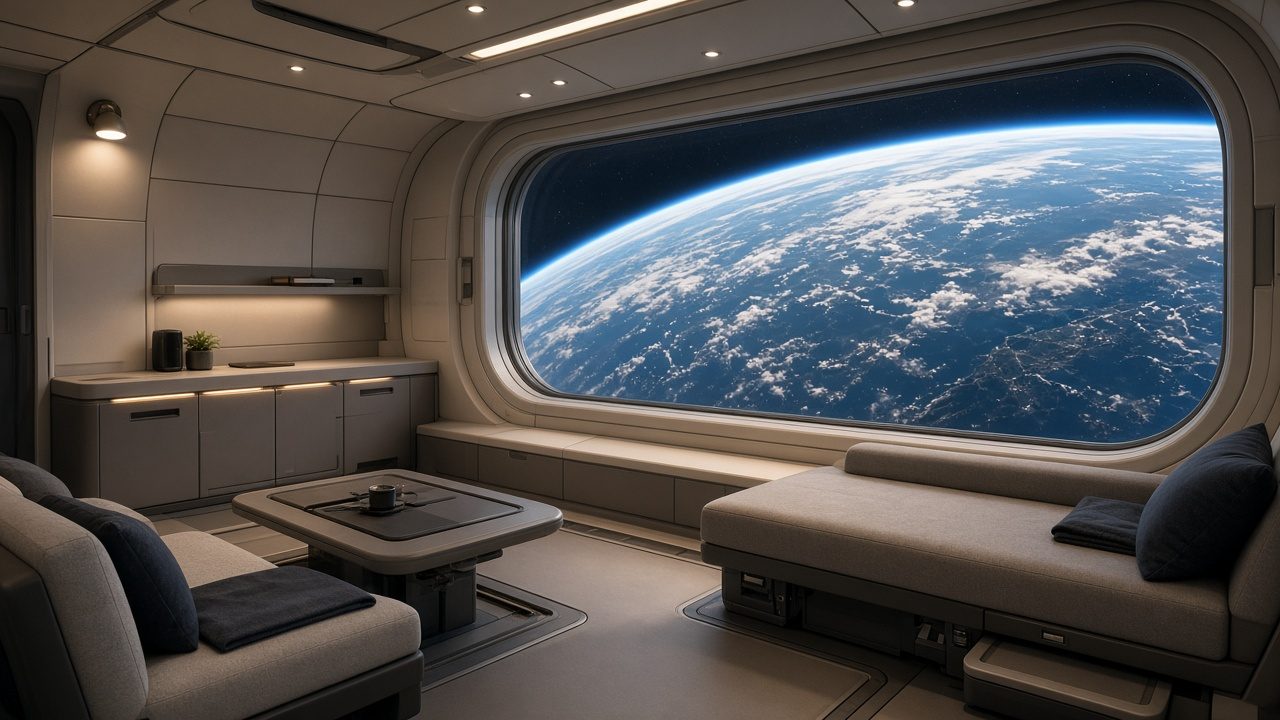
Training on the ground still takes months. Launch is brief and violent, then continuous weightlessness. On Haven-1, Vast describes personal crew quarters, a communal table and that large dome window — the view most visitors will remember. Meals are packaged; exercise is mandatory; sleep is in a tethered bag or small cabin. Starlink on Haven-1 is meant to bring gigabit-class links, but privacy, noise and a closed cabin remain part of the deal.
Hilton’s work with Starlab treats sleep, hygiene, shared spaces and the journey from Earth as hospitality problems, not only engineering ones. That does not mean white tablecloths in 2028 — only that comfort already matters, because private customers will compare notes. Durations start short: Axiom’s ISS visits and Haven-1 missions are on the order of one to two weeks. Longer stays wait for more volume, better life-support margins and regular cargo flights.
What it costs (public figures only)
Public price tags are scarce, and they change. Treat these as reported figures, not a booking sheet:
- Axiom private ISS seats have been widely reported at about $55 million per person (Ax-1 era reporting), covering training, Dragon transport and roughly 10–14 days on station. NASA support fees sit alongside that figure.
- Suborbital tourist flights cost far less — often quoted in the hundreds of thousands of dollars — but offer minutes of weightlessness, not days in orbit.
- Haven-1, Starlab, Orbital Reef and Starship tourism have not published a stable public retail price for a tourist cabin as of this writing.
Optimistic commentary sometimes suggests large reusable ships could push orbital prices down over the next decade or two. That is speculation. Until seats are sold on a published tariff, the honest number for a multi-day orbital stay remains “tens of millions of dollars for a private ISS-class mission.”
The hard parts
Safety comes first. Stations must survive debris, hold pressure, scrub carbon dioxide, manage heat and get a sick guest home. Regulators and insurers will not treat a hotel like a yacht.
Life support and cargo cadence decide whether a station feels like a visit or a survival exercise: water, food, air and spare parts still mostly come from Earth. Regulation is catching up on certification, medical standards, liability and rescue. Schedule risk is real too — Haven-1 has slipped toward a 2027 target; Axiom’s 2028 free-flyer goal, Starlab’s 2029 aim and Orbital Reef’s “end of the decade” language can all move. ISS retirement near 2030 keeps pressure on everyone.
Tourism as a bridge to a bigger orbital economy
Hotels alone will not build shipyards or fuel depots. They do something more immediate: they prove private people will pay to be in orbit, and they create recurring traffic. Traffic justifies cargo vehicles, docking standards, spare-part inventories and eventually local supplies of water and propellant. Research labs and manufacturers need the same bones.
That is why orbital hospitality belongs in a series about industries in space. It sits beside mining, manufacturing and energy as one of the demand signals that can turn a string of missions into an economy.
Looking ahead
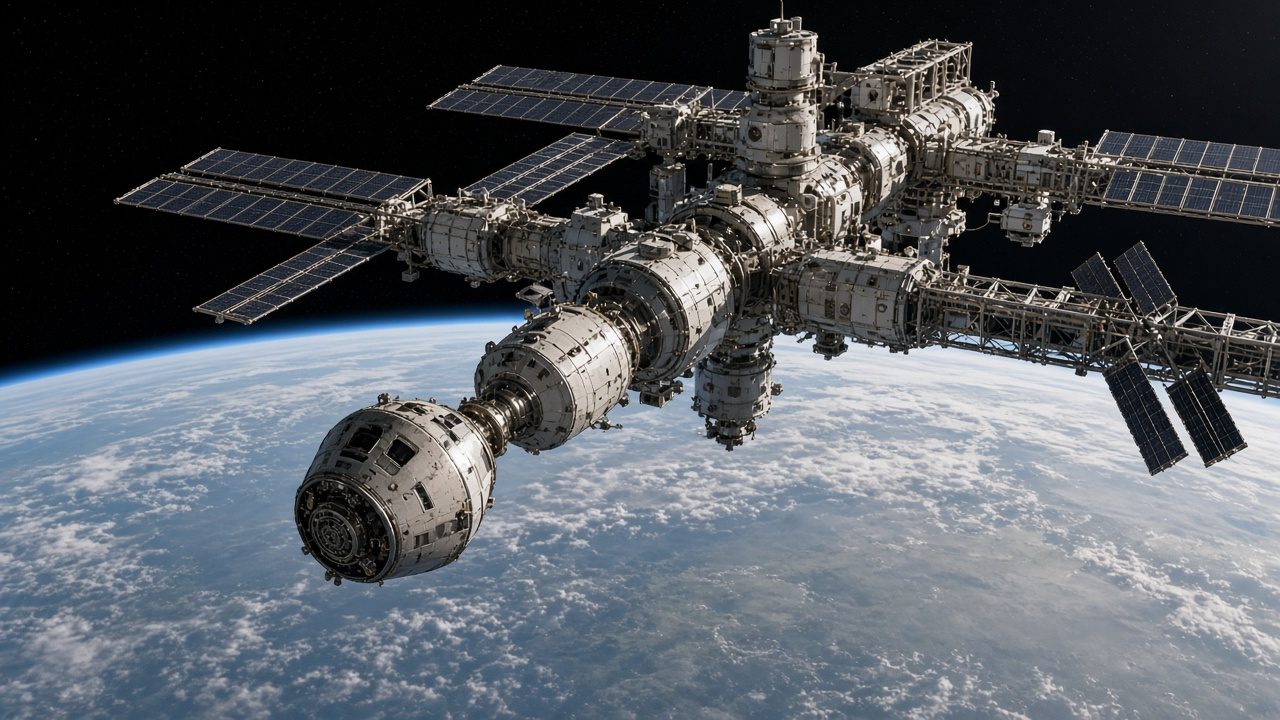
Within a few years we may see free-flying commercial stations hosting private crews for weeks at a time. Within a decade, if even two of the projects above deliver, low Earth orbit could hold more than one address where a civilian can sleep and look down at home.
Galactic Space Industries wants to see that thriving orbital economy take shape — stations that earn their keep, traffic that becomes routine, and an off-world market that grows because customers keep showing up. Hotels will not be the whole story. They may be one of the first chapters people can book.
Further reading
- Axiom Space – station assembly update (Dec 2024)
- Axiom Space – Ax-5 selection (Jan 2026)
- Vast – Haven-1
- Vast – Haven-2
- Starlab / Voyager – CCDR (Feb 2026)
- Airbus – Starlab
- Hilton – Starlab lodging partnership
- Sierra Space – Orbital Reef
- Blue Origin – Orbital Reef
- New York Times – Ax-1 seat price (~$55 million)