Blog / Asteroid Mining
The Potential of Mining Asteroids
By Galactic Space Industries Team
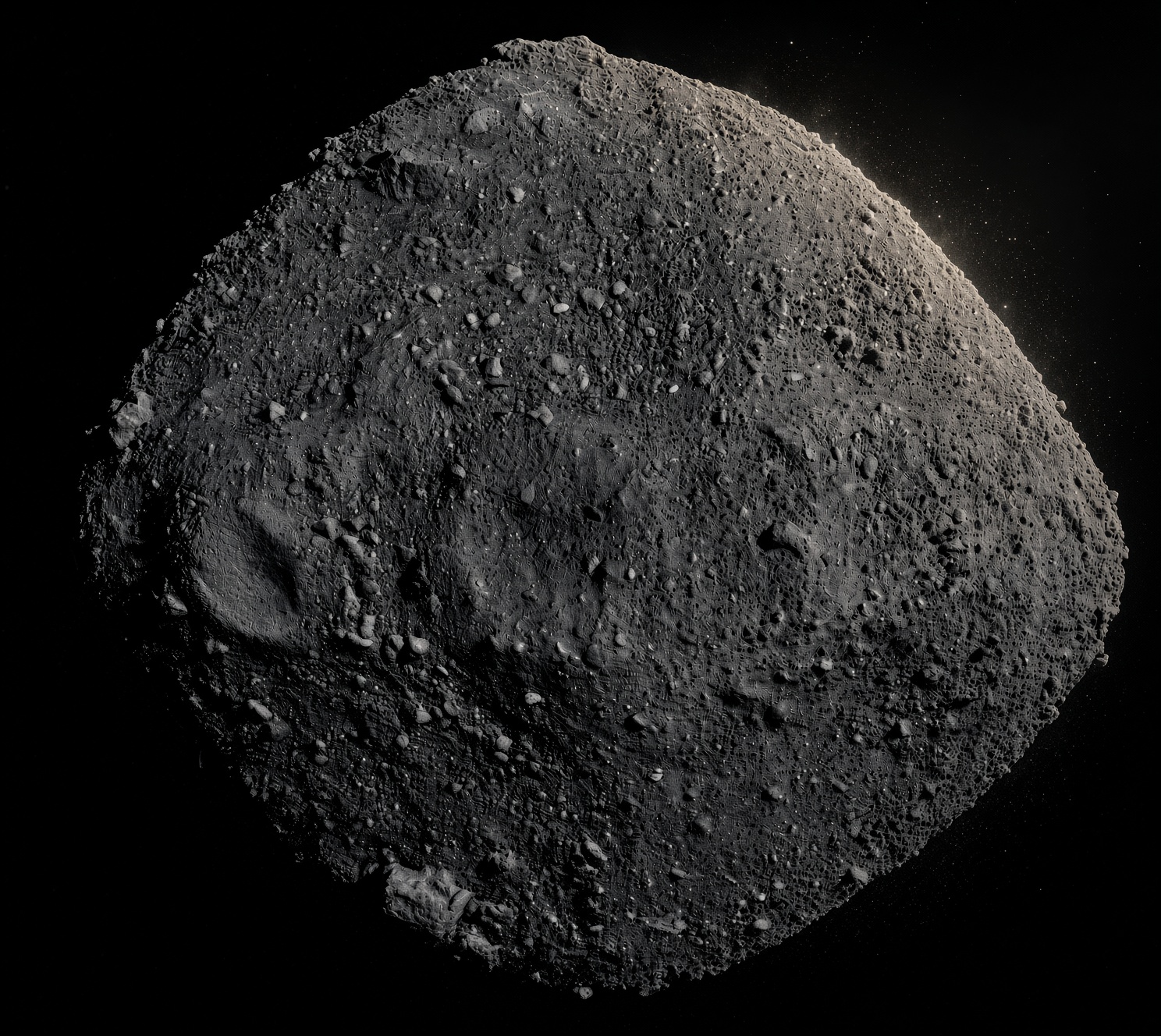
The useful way to think about asteroid mining is not a treasure chest falling on a city. It is a factory that never has to climb out of Earth’s gravity.
For as long as we have launched satelites, every kilogram of weight and fuel has started on the ground and paid a brutal ticket to leave. That is why space still feels expensive even as rockets get cheaper. The rocks already circling the Sun skip that ticket. They hold water, iron, nickel, and, in some cases, platinum-group metals. We have already flown to one, touched it, and brought pieces home. The commercial step is staying — and turning what you find into propellant, plate, and hulls in the place those things will actually be used.
That is a resource business in its own right. It is also the supply line that lets the rest of the off-world economy stop packing every kilogram from home. Without local fuel and metal, every station and ship is still a delivery from Earth.
What the rocks actually hold
Asteroids are not one kind of object. Some are closer to a dirty snowball, some are closer to a broken core of metal, and many sit in between. The first job of a miner is to know which is which, because the product — and the plant — changes with the rock.
Carbon-rich bodies, often called C-types, are the most interesting early target for fuel. Many of them carry ice or minerals that have water locked in their crystal structure. Heat the material and water comes off as vapour. You can store that water as a radiation shield, as life support, or as feedstock. Split it with electricity from solar arrays and you have oxygen and hydrogen, the same propellants a heavy reusable ship drinks by the thousand tonnes. A single full load on a large vehicle is more than a thousand tonnes of fuel. Make that on a rock that already sits in a useful orbit and you stop lifting those tonnes from Earth. Over the life of a working inner-system fuel trade, that one product can be a $50–200 trillion business, because almost every later mission is a customer.
The second product is ordinary metal, and it is the one people tend to skip because it does not glitter. Iron and nickel are cheap on Earth. In orbit they are whatever it would have cost to launch the same mass. If lift is about $100 per kilogram, a tonne of steel already waiting in space is worth about $100,000 as a substitute for launched metal. That steel becomes tanks, landing pads, radiation shielding, and the bones of habitats and ships. It does not need to come home. In fact it should not come home. Bringing a mountain of iron back to a planet that already has iron would wreck the price and waste the one advantage the asteroid had: it was already off the ground.
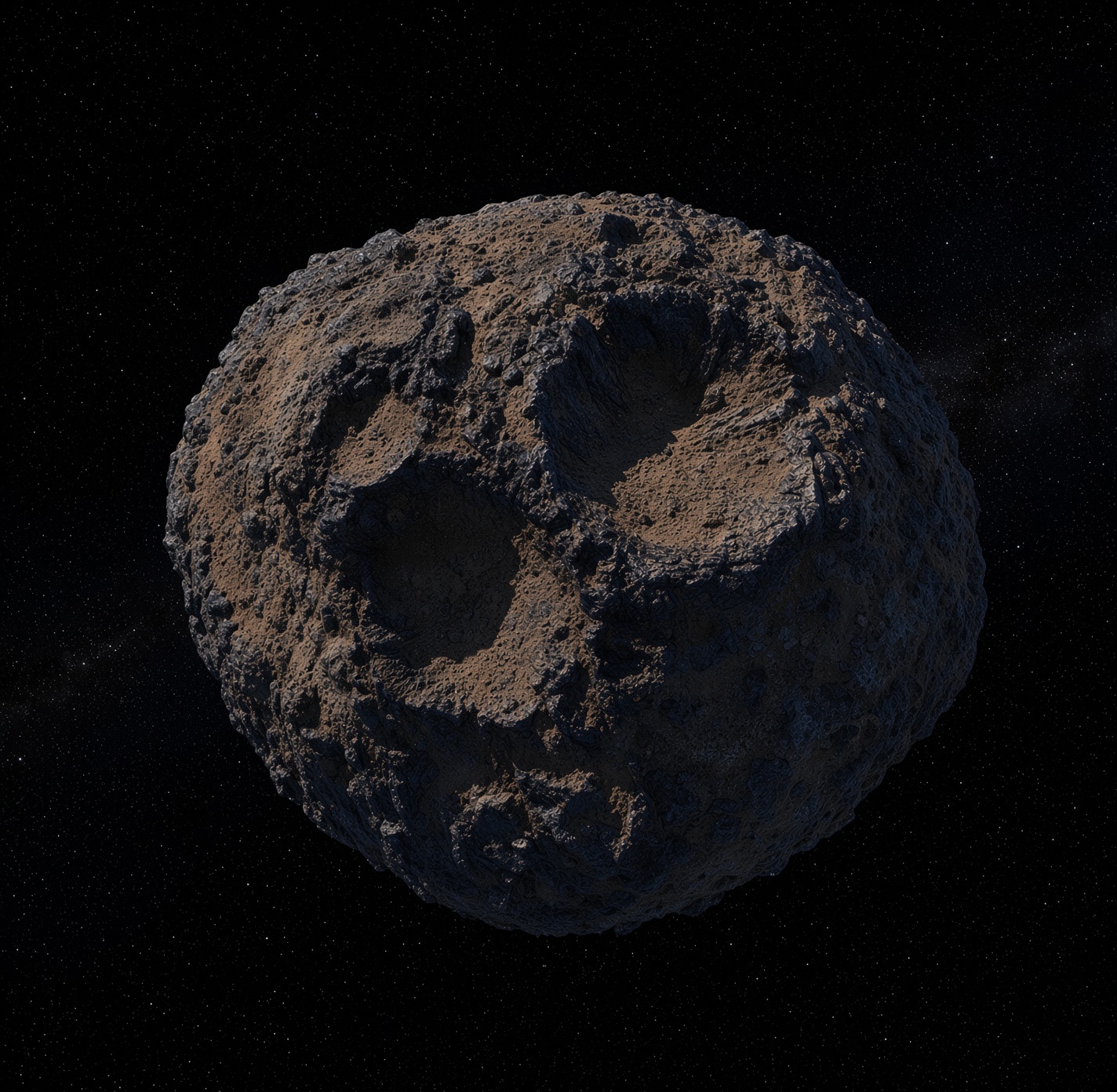
The third product is the scarce stuff — platinum, iridium, and the rest of that family. A nearer metal-rich object has been credited with on the order of 900,000 tonnes of platinum. 16 Psyche, a large metal-rich body in the main belt, has been given thought-experiment values around $10 quintillion if you priced its iron and nickel like Earth metal. Those figures are not a sales forecast. They are a way of saying the inventory is enormous. You would never dump it on London or Shanghai. You would use the bulk as construction feedstock in space and send home only a thin, careful stream of the metals that stay valuable in small amounts.
How a mine in space would actually run
You do not start with Psyche. You start with a near-Earth asteroid that is easier to reach than the Moon. The first years of the industry look more like surveying than like a pit. Telescopes and small prospecting craft measure size, spin, mass, and the mix of water and metal. A rock that looks rich from Earth can turn out to be a loose pile of rubble. A quieter object can be a better first plant. The first saleable product is the survey itself: a map of which bodies are worth a second, heavier trip.
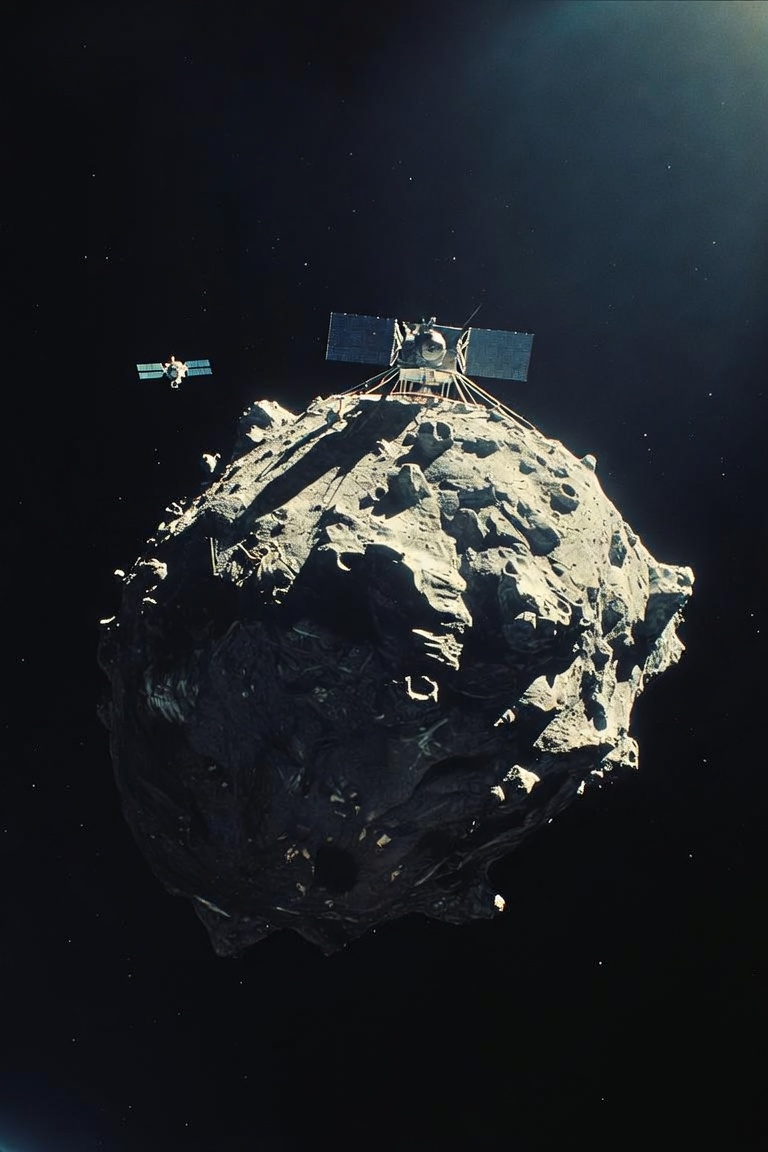
Once a target is chosen, a spacecraft has to match its path and stay with it. That sounds simple until you remember that many of these bodies are hundreds of metres across, spinning, and so weakly held together that a clumsy landing would kick the surface into a cloud. NASA’s OSIRIS-REx showed that the approach-and-touch part can be done. It flew to Bennu, reached out, and brought a sample home. A working mine adds the rest of the production line. The craft has to hold on — with anchors, with bags around a loose body, or with a slow, controlled spin — so that tools do not throw the ore away. Then it has to process what it holds.
Water is the simplest first product because the chemistry is familiar. You collect or grind the ice-bearing material, heat it, catch the vapour, and store the liquid. Some of that water stays as water. Some of it is split into propellant and moved to a depot, where tugs, landers, and heavy ships can fill up without a tanker from Earth. Metal is slower. Magnets can pull nickel-iron grains from a dusty mix. Heat and solar furnaces can melt a more solid body. The output is not a polished beam on day one. It is plate, billet, and tank stock — the dull shapes that a yard later turns into a hull.
The customer for almost all of this is not a smelter in Australia. It is another machine already in space. Depots buy fuel. Construction yards buy metal. Only the scarce metals need a ticket back through the atmosphere, and even those should arrive as a trickle, not a flood. That is the difference between a stunt and a business. A stunt returns a box of dust to a desert. A business leaves the plant running and sells the next tonne to whoever is building the next ship.
Why the numbers get so large
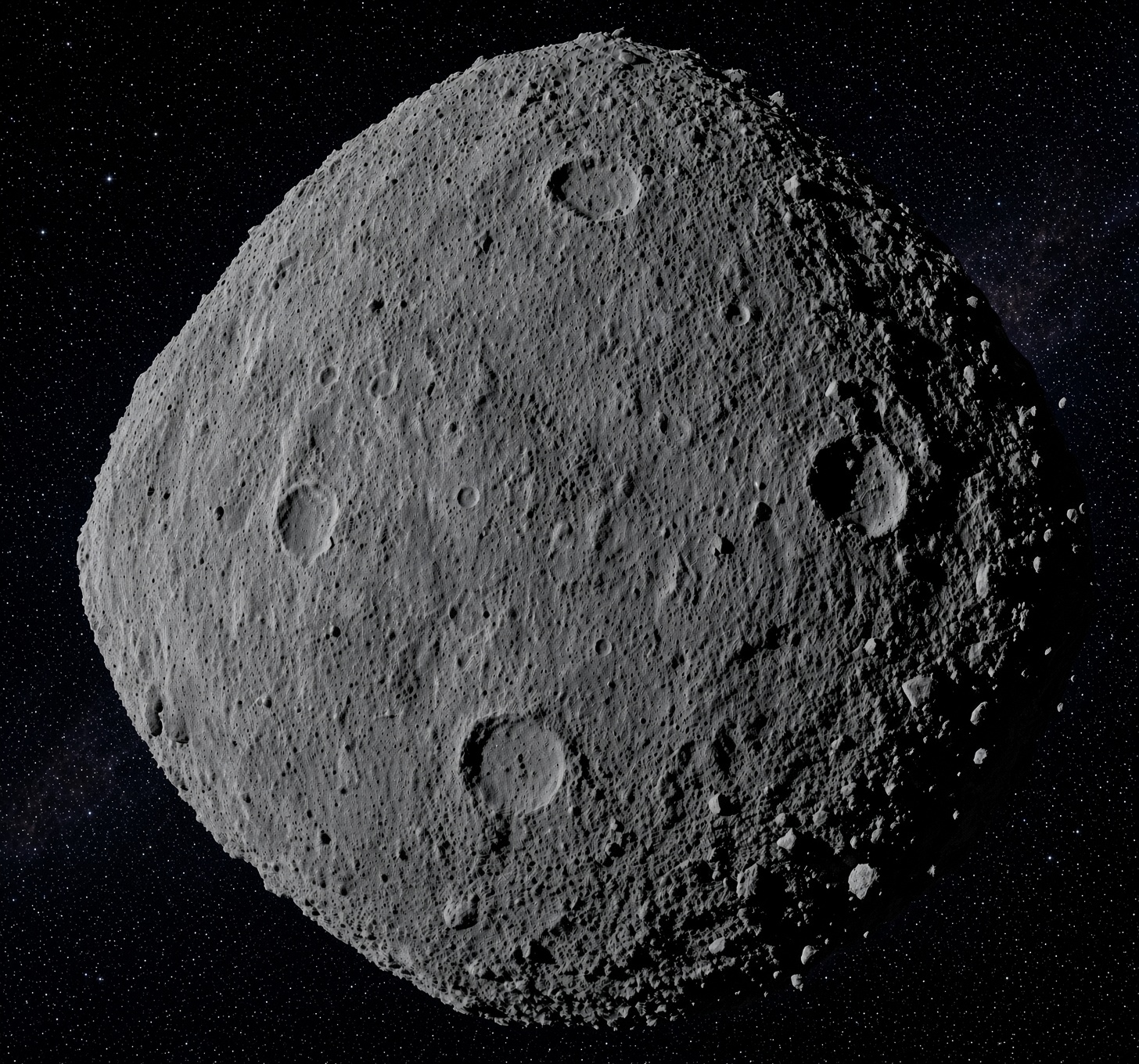
The price of asteroid metal is not the price of scrap in a yard on Earth. It is the cost of not launching that mass. At $100 a kilogram to orbit, a billion tonnes of steel already in space is a $100 trillion materials book. Ten billion tonnes is $1 quadrillion. The main belt holds far more metal than that. You will not mine it all, and you do not need to. A small slice, used where it sits, is enough to change what it costs to build anything beyond low Earth orbit.
Water follows the same arithmetic, only faster, because fuel is the thing every mission burns. A depot that can sell propellant at a price below launched water does not need a romantic story. It needs reliability. Once that exists, traffic grows, and the depot’s value grows with the traffic. A network of those plants, serving the inner solar system for decades, can sit in the $50–200 trillion range. Early prospectors and sample-scale mines are smaller — still optimistic at $1–10 trillion if they own the maps and the first working sites — but they are the option on the larger book.
The follow-on is the part that turns a mine into an industrial base. A heavy reusable ship is roughly 100 tonnes of dry mass and more than 1,000 tonnes of propellant when it is full. Built on Earth, every kilogram of that vehicle has to leave the well. Built from asteroid nickel-iron and filled from asteroid or lunar water, it is a factory product whose parts were never on this planet. The first hulls will be expensive and slow. After that, each new miner and tanker lowers the cost of the next hull, because the feedstock is already in motion. A company that owns refining and the yards that consume it can be worth $100 trillion and up. A metals house that also meters platinum home can add another $10–100 trillion without ever flooding the terrestrial market.
These are optimistic figures. They assume the plants work, the law allows the work, and the customers — depots, stations, shipyards — actually arrive. They are still the right scale to have in mind. Asteroid mining is not a side bet on a few kilograms of exotic metal. It is how you stop paying launch costs for the bones of the next economy.
What still has to be solved
None of this is a weekend project. Many near-Earth objects are rubble piles, not solid ore, and a badly designed tool will scatter the very material you came to collect. Dust clings to mechanisms. Anchors slip in weak gravity. Thermal control is awkward when the Sun hits one face and the other sits in deep cold. Communication delays grow as you move out toward the belt. Resource law beyond Earth is still being written, so the first companies will spend as much time on title and insurance as they do on furnaces.
Those problems decide who opens the first reliable plant. They do not shrink the inventory. The sequence is already visible even if the engineering is not: cheaper lift, then scouts, then a water plant close to Earth, then metal that stays in space, then hulls welded from that metal. Each step can sell to the next. That is what makes the business compound instead of remaining a string of one-off missions.
From expeditions to a supply line
For most of the space age, a mission has meant packing everything you will need and hoping it lasts. Asteroid mining is how that habit ends. Fuel, steel, and eventually ships become things you make where you are going. The difference is the difference between a series of expeditions and an industry that can keep growing after the last kilogram has been launched from Earth.